
eSignature vs Wet Signature: Cost, Speed, Security and Business Impact
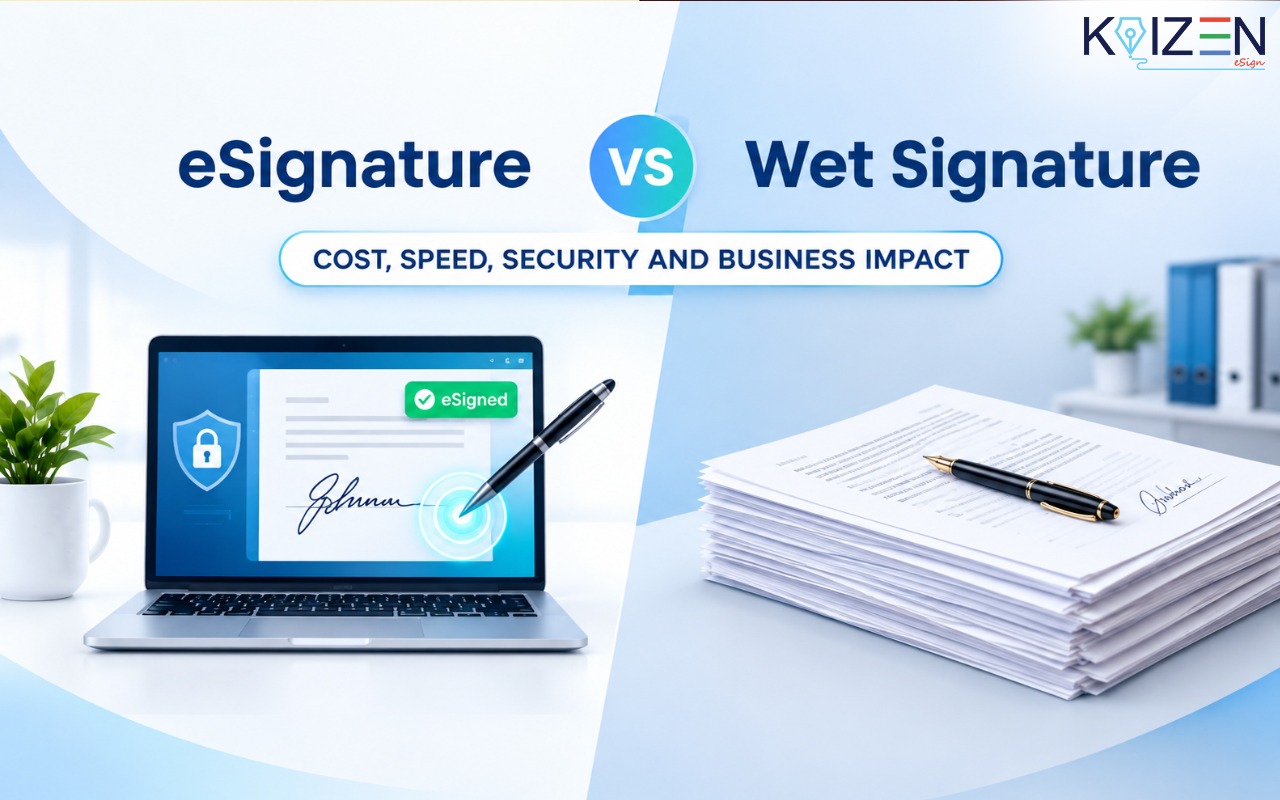

TL;DR: eSignature vs Wet Signature
- Cost: eSignatures can reduce printing, courier and administrative expenses.
- Speed: Sign documents remotely without physical delivery delays.
- Security: Digital workflows can offer authentication, timestamps and audit trails.
- Convenience: Sign, track and manage documents online.
- Legal validity: eSignatures are recognized in India, subject to applicable laws, requirements and exceptions.
- Best choice: eSignatures suit many routine business workflows. Wet signatures may still be necessary for certain documents.
Verdict: Choose eSignatures for faster, more convenient document workflows when legally appropriate. Compare total costs and security requirements before making the switch.
Signing a document is simple. Getting it signed, delivered, tracked and stored can take much longer. This is where the choice between an electronic signature (eSignature) and a traditional wet signature makes a difference.
eSignatures offer a faster, more convenient way to sign documents remotely, while wet signatures remain relevant for transactions that require physical execution. The right option depends on the document, the total signing cost, security requirements and applicable laws.
In this guide, we compare eSignatures vs wet signatures across cost, speed, security and legal validity in India, helping businesses understand the key differences and choose the right signing method for their needs.
Why Signing Process Matters More Than Signature?
A contract may take only seconds to sign, yet completing the entire process can take days. A document might need to be printed, sent to another location, signed, returned and scanned before everyone has a copy. Follow-ups and delivery delays can add even more time.
The challenge with wet signatures is not the act of signing itself. It is the process surrounding it. Physical documents need to move between people, and tracking their progress often depends on manual updates and follow-ups.
eSignatures simplify this process by allowing people to sign documents electronically, wherever they are. Depending on the platform, businesses can also track signing progress, send reminders and store completed documents digitally.
The result can be a more efficient signing workflow, with fewer physical handoffs and less administrative work. To understand whether switching makes sense, it helps to compare eSignatures and wet signatures across cost, speed, security and legal suitability.
eSignature vs Wet Signature: Key Differences
1. Signing Process and Convenience
A wet signature requires a physical document to be printed, signed and delivered to the relevant parties. An eSignature allows signatories to review and sign documents electronically, without needing to be in the same location. This makes remote signing easier for businesses working with clients, vendors and employees across different locations.
2. Document Turnaround Time
Wet-signature workflows can involve delays caused by printing, courier delivery, scanning and manual follow-ups. eSignatures can eliminate many of these steps, allowing documents to move between signatories electronically. The actual completion time still depends on how quickly each person reviews and signs the document.
3. Cost and Administrative Effort
Paper-based signing can involve expenses for printing, postage, courier services, physical storage and employee time spent tracking documents. Electronic signing can reduce some of these costs by digitising the process. However, platform fees, transaction charges and implementation costs should also be considered when comparing the total cost of each method.
4. Security and Document Tracking
Physical documents rely on appropriate handling, access controls and recordkeeping to protect against loss or unauthorised changes. Depending on the platform and signing method, eSignatures can provide signer authentication, timestamps, audit trails and document-integrity checks. These capabilities can improve traceability, but the level of security varies between solutions.
5. Legal Validity and Document Suitability
Wet signatures and electronic signatures can both be appropriate for business transactions, depending on the applicable legal requirements. Electronic signatures are recognised under India’s Information Technology Act, 2000, subject to relevant conditions and exceptions. Some documents may require a specific signing method or additional formalities, so businesses should verify the requirements before choosing how to execute an agreement.
Understanding these differences provides a starting point. The next step is to look at how each signing method affects the total cost of completing and managing business documents.
Cost, Speed and Security: Which Signing Method Wins?
For most routine business workflows, eSignatures offer practical advantages by reducing physical document handling and simplifying the signing process.
- Cost: eSignatures can reduce printing, courier and administrative expenses, although platform fees must be considered.
- Speed: Documents can be signed remotely without waiting for physical delivery, helping reduce turnaround times.
- Security: Depending on the platform, electronic signing can provide authentication, timestamps and audit trails that improve traceability.
The actual benefits depend on document volume, the signing method and the business’s existing processes. To understand the financial impact, explore our guides to eSignature software costs in India and eSignature pricing.
Are eSignatures Legally Valid in India?
Electronic signatures are legally recognized under applicable provisions of India’s Information Technology Act, 2000, subject to relevant requirements and exceptions. However, not every electronic signing method is suitable for every document or transaction.
Businesses should check whether a document requires a particular signing method, witnessing, notarization, registration or other formalities before choosing an electronic workflow.
A digital signature using cryptographic techniques is also different from a scanned image of a handwritten signature. The appropriate method depends on the document and its legal requirements.
For more details, consult the Controller of Certifying Authorities and read our guide to the legal validity of eSignatures.
eSignature vs Wet Signature: Which Should Your Business Choose?
Wet signatures remain useful when physical execution or specific formalities are required. However, for many routine business agreements, approvals and HR documents, eSignatures can make signing more convenient by reducing physical handoffs and simplifying document tracking.
Before switching, evaluate the document’s legal requirements, your security needs, signing volume and the total cost of each process.
If you’re looking to simplify document signing, KAiZEN eSign offers electronic-signature solutions with integrations for Salesforce and TallyPrime. Explore KAiZEN eSign to learn more about its capabilities and determine whether it fits your business workflow.
FAQs
Could a wet signature ever be more secure than an eSignature?
Not really. A wet signature is easier to forge than most people assume, and it comes with no built-in record of when or how it was applied. A certificate-backed eSignature carries a timestamped, tamper-evident trail that paper just doesn't have.
Do we have to switch everything over at once?
No, and most businesses don't. Pick the one document type causing the most delay, move that first, and expand once you can see the time saved.
Does the other person need to install anything to sign?
Usually not. Most platforms just need a secure link, by email or WhatsApp, and they can open, read, and sign without creating an account.
Are there documents that still legally need a wet signature?
A handful, depending on where you're based, some property transfers, wills, certain government filings. Everything else, from contracts to offer letters to internal approvals, can generally move to eSignature.
How do you actually compare the cost of the two?
Wet signatures carry a cost that scales with volume but rarely gets tracked as one number, paper, courier, storage, all spread across different budgets. eSignature platforms usually charge per signature or per user, so the real cost is visible and tied directly to how much you're actually signing.
Sign up for Free
Trial today!
Try KAiZEN for free